You are on the waitlist. A member of our team will review your application shortly.
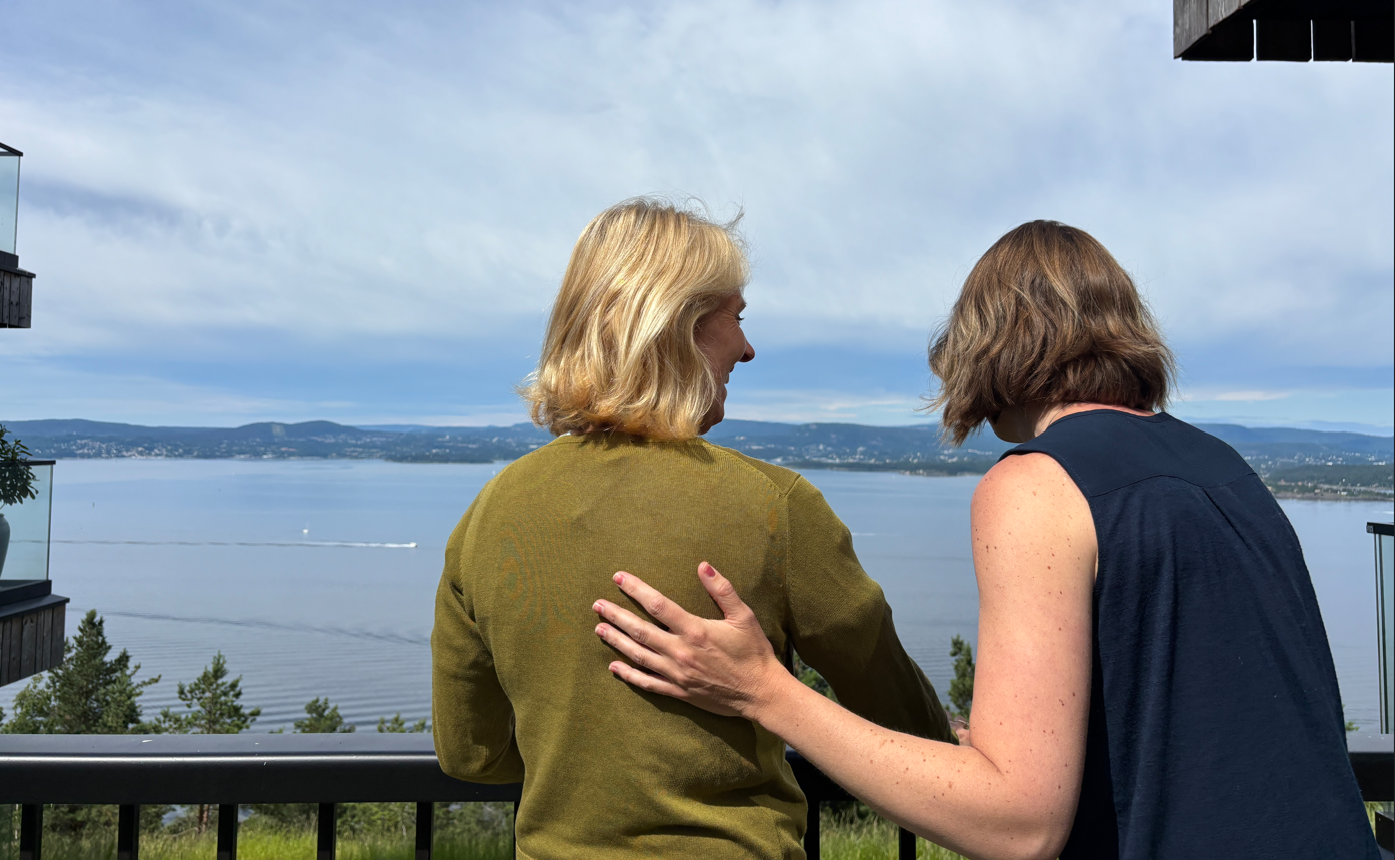
Our interdisciplinary team of clinicians, researchers, and patient representatives, work across Norway, Sweden and Latvia to support meaningful and sustainable rehabilitation at home. At PEER-HOMEcare, we believe rehabilitation should continue in everyday life, especially in the place you know best… your home.
.png)
Our consortium spans across Norway, Sweden, Latvia, Portugal, Brazil, and Italy, linking leading universities, rehabilitation hospitals, and patient associations globally. Our research originates from the Norwegian School of Sport Sciences (NIH), in Oslo, Norway. Our approach is currently being tested across Norway, Sweden and Latvia.
Traditional rehabilitation often happens during scheduled therapy sessions. PEER-HOMEcare takes rehabilitation beyond the clinic by transforming the person’s everyday home environment into an opportunity for recovery.
We look at the whole context of a person’s daily life, their spaces, routines, activities, equipment, and social interactions, to identify opportunities to increase movement and engagement of the affected upper limb.
Rather than adding more exercises or requiring expensive equipment, PEER-HOMEcare uses the objects, activities, and resources already available in the home to create meaningful opportunities for movement, exploration, and practice.
This provides a practical, low-cost approach that supports the transition from hospital to home and helps stroke survivors continue their rehabilitation within their own daily lives.
Every person’s recovery journey is different. PEER-HOMEcare begins by understanding the individual , their abilities, goals, routines, challenges, and the environment in which they live.
Together with the stroke survivor, their family, and healthcare professionals, we identify opportunities to make small but meaningful changes to the home environment. This is what we called our "Environmental Enrichment Process". These changes are carefully designed to create the right balance between challenge, safety, and success.
By promoting frequent, meaningful engagement within everyday activities, PEER-HOMEcare supports the principles of neuroplasticity and motor learning, helping people rediscover movement through exploration and practice.
PEER-HOMEcare is designed to empower stroke survivors and families with the knowledge, confidence, and resources to continue their rehabilitation journey independently.
Through education, practical guidance, and digital resource portals, participants are supported to become active partners in their own recovery.
Wearable sensor technology provides additional insight into real-world upper limb activity, helping understand how movement is incorporated into everyday life and supporting more personalised rehabilitation.
The goal is not only improvement during the program, but the development of sustainable habits, confidence, and independence that continue long after the intervention ends.