New Scoping Review! Unlocking the potential of home-based rehab
Home-based rehabilitation offers stroke survivors the opportunity to continue recovery in familiar surroundings, but are current approaches making the most of this setting? A recent scoping by Prof. L Oppici highlights the strengths of home-based rehabilitation while identifying key gaps in intensity, personalisation, and patient involvement. Discover how future programs can better harness the home environment to support meaningful recovery and improved quality of life after stroke.
Unlocking the Full Potential of Home-Based Stroke Rehabilitation
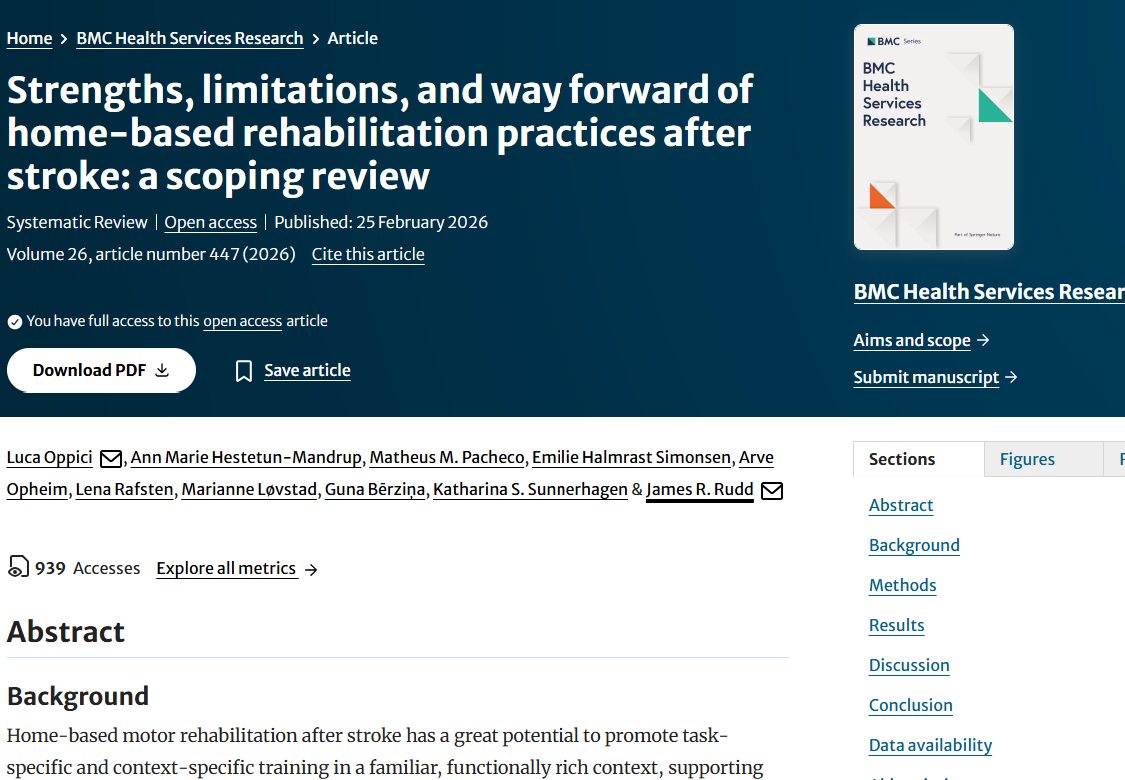
Recovering from a stroke often continues long after a patient leaves the hospital. Home-based rehabilitation has emerged as an important approach, allowing individuals to practice movement and daily activities in the comfort of their own homes. Our recent scoping review Strengths, limitations, and way forward of home-based rehabilitation practices after stroke: a scoping review' examines 66 studies of how home-based rehabilitation is currently delivered and whether it fully leverages the advantages of the home environment.
The review found several strengths. Many programs successfully incorporated task-specific exercises that mimic everyday activities, helping stroke survivors regain functional skills. Home settings also offer opportunities for personalized and meaningful rehabilitation experiences.
However, the researchers identified important limitations. Many interventions provided insufficient training intensity, made limited use of the home environment as a therapeutic resource, and relied heavily on prescriptive instructions rather than encouraging problem-solving and active learning. In addition, caregivers and family members were often underutilized, and patients were not consistently involved in designing their own rehabilitation programs.
Looking ahead, the authors recommend a more person-centered approach. Future programs should provide adequate training intensity, adapt the home environment to support recovery, involve caregivers more meaningfully, and actively engage stroke survivors in planning their rehabilitation. By transforming the home into a dynamic rehabilitation space, healthcare professionals may help improve long-term recovery, independence, and quality of life after stroke.
Read the article here
Oppici, L., Hestetun-Mandrup, A. M., Pacheco, M. M., Simonsen, E. H., Opheim, A., Rafsten, L., Løvstad, M., Bērziņa, G., Sunnerhagen, K. S., & Rudd, J. R. (2026). Strengths, limitations, and way forward of home-based rehabilitation practices after stroke: A scoping review. BMC Health Services Research, 26(1), 447. https://doi.org/10.1186/s12913-026-14139-4