
Step-by-step guide
Deliver the intervention from preparation and engagement through to assessment, goal-setting, intervention implementation, and follow-up.
Recruitment
Identify eligible participants, complete screening, and obtain consent.
You will be meeting the participant whilst in hospital
- Identify eligible participants from the hospital database or referrals, and use the Inclusion & Exclusion Criteria to select them (located in the Participant Log excel doc)
- Use the website (Home, About, Our Science and Inside the Portal) to discuss the program in detail
- Invite the participant to the PEER-HOMEcare intervention using the invitation letter
- Conduct screening assessments (MOCA, SAFE, mRS) and submit them intoTSD. Offer general feedback and eligibility status
- Contact next of kin (NOK) to discuss program plan
- Obtain written consent after 48h
- Collect discharge information (see Participant Details tab in Participant Log)
- If appropriate, you may like to send the self-reported questionnaires (Abilhand, SSEQ, SIS, GAD-7 and PHQ-9) via email through Nettskjema and encourage them to complete once they are settled in at home. Use the phone call to check in to see how they are doing with the questionnaires.
- Tentatively agree to 2 home visits (preferrably at the start and end of the week e.g. Monday and Friday) to capture baseline data. Send confirmation email/text with date, time, and location, along with questionnaires.
Resources
Prior to the STUDY
- Give the participant a at least 1 weeks to adapt after returning home from hospital.
- Confirm the 2 home visits again via phone call. Use the Phone Log sheet in the Participant Log to write notes. Aim for the beginning and end of the week in order to capture at least one week of sensor data prior to your Environmental Enrichment (EE) strategies.
- Ensure the participant has access to the Participant Portal and assist them with any login details. Note: they will need to have approved access after they sign up.
- Use this time to gather Participant Details and set up the sensors to their laptop device (see Setting up the Sensors in the Therapist Portal)
Tips when working with a stroke survivor

- Build trust from the start. Many stroke survivors feel vulnerable before discharge. Take time to listen before explaining the program.
- Involve family and formal/informal supports. Encourage a support person to be present from the first visit.
- Use shared decision-making. Goals should reflect what matters to the participant.
- Set realistic expectations. Progress may be slow - celebrate small wins and normalise setbacks.
- Adapt your communication. Some stroke survivors may have aphasia or fatigue. Use plain language and allow extra time.
Week 1 – Visit 1
First home visit. Focused on sensor training, goal-setting, and questionnaires.
what to do
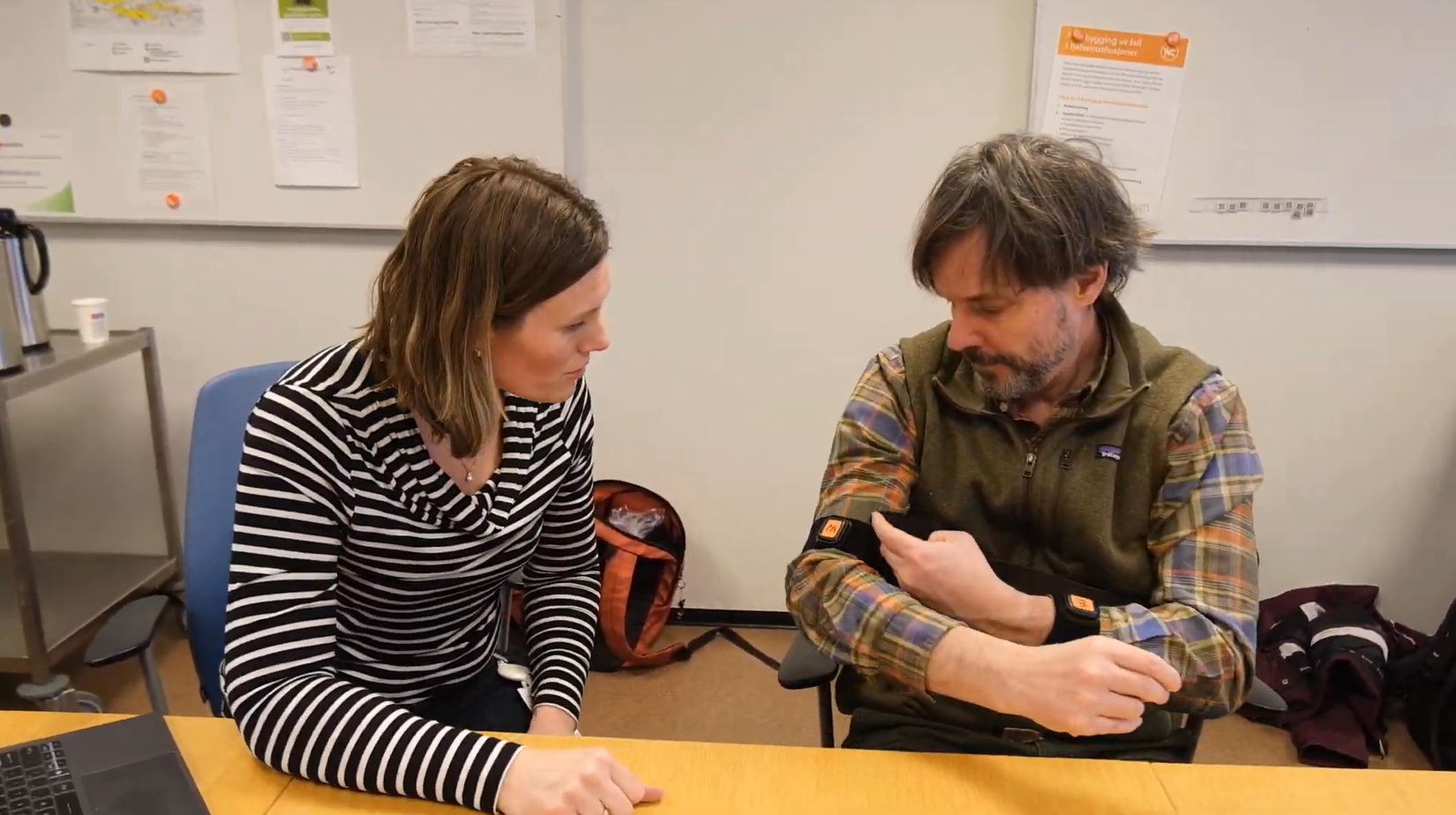
- Induct and provide education to participant and support person on sensors (application and start data collection)
- Discuss 3 goals using mod-COPM
- Complete the Barthel Index (BI)
- Give paper copies or help with questionnaires via Nettskjema (5 separate links for Abilhand, SSEQ, SIS, PHQ-9, GAD-7). Ask how much support they received to complete it.
- Introduce the daily diary
- Show procedure of how to charge and turn off sensors and agree on the times to wear it
Resources
Week 1 – Visit 2
Second home visit same week. Collect baseline data, collect Week 1 sensor data and identify meaningful and routine Activities of Daily Living (ADLs)
what to do
- Review and collect sensor data. Discuss any challenges
- Complete ARAT and FMA-UE assessments
- Collaborate with the participant to prepare for EE strategies using Environmental Mapping tool (see Participant Log excel doc)
- Encourage daily diary use to track progress
- T1-T2 Confirm 1-2 weekly home visits. Note: Sessions may taper off over the next few weeks depending on the clients' progress and may even be a phone call or tele practice appointment
Resources
Week 2–6
1–2 weekly home visits. Taper off based on participant progress. May be replaced by phone or telepractice.
what to do
- Review sensor data and daily diary
- Adjust EE strategies as needed
- Collaborate with the participant to negotiate frequency and type of weekly home visits and phone/video calls
- Complete re-assessment data at end of Week 6 (T2) (input data into Participant Log excel doc) (includes, Abilhand, SSEQ, SIS, PHQ-9, GAD-7, BI, ARAT, FMA-UE)
3-month follow-up
Final follow-up call by phone. Use the dedicated log tab to make notes.
what to do
- Call participant for 3-month follow-up
- Review progress on the 3 mod-COPM goals
- Log the call
Resources