The science behind PEER-HOMEcare.
Before you deliver the program, understand the new approach — the theory, the research, and your role.
How the home can enhance recovery
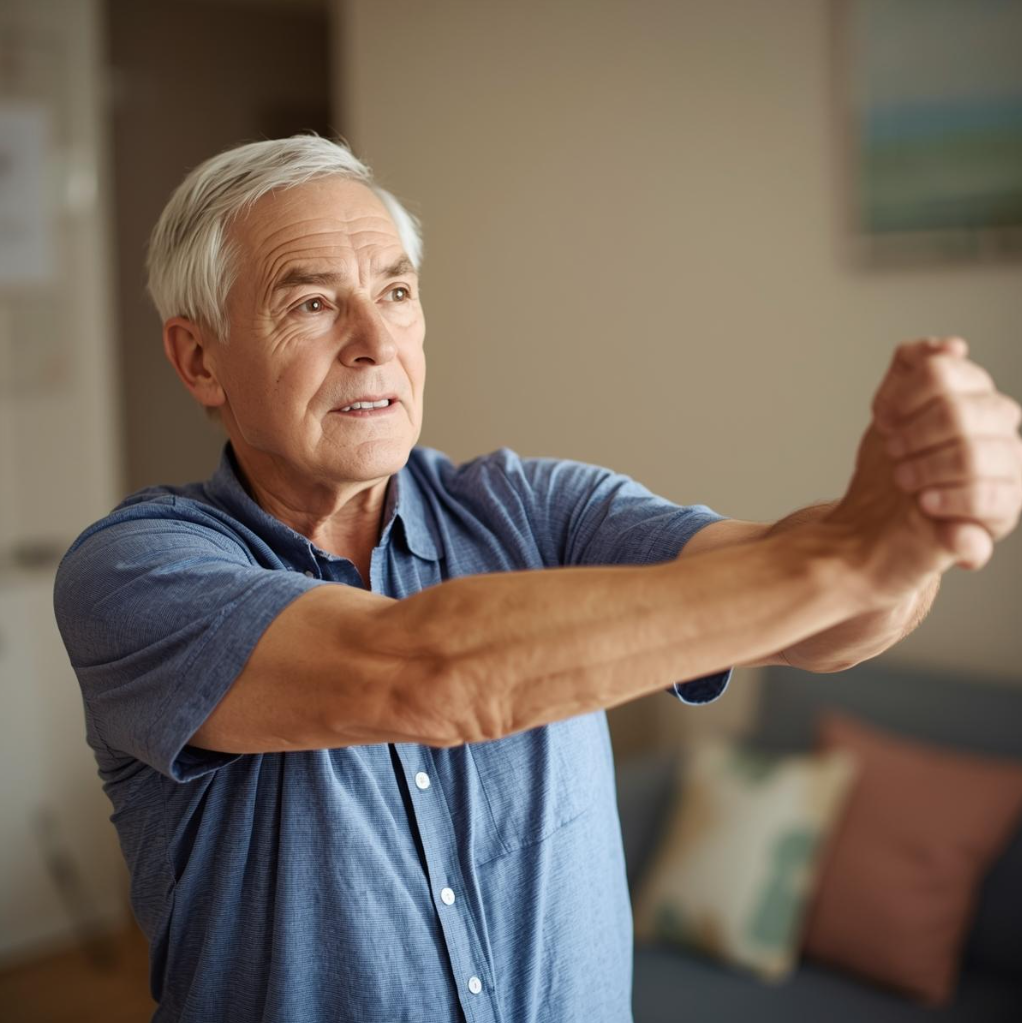
Stroke recovery is driven by neuroplasticity - the brain's ability to rewire itself through meaningful, repeated movement. The home is where that movement happens most naturally.
Our research has the potential to prove that the most meaningful gains come from movement embedded in everyday life - reaching for a cup, opening a door, preparing a meal.
PEER-HOMEcare is built on the insight that the home environment itself can be shaped to encourage more and better movement for stroke recovery.
Key principle
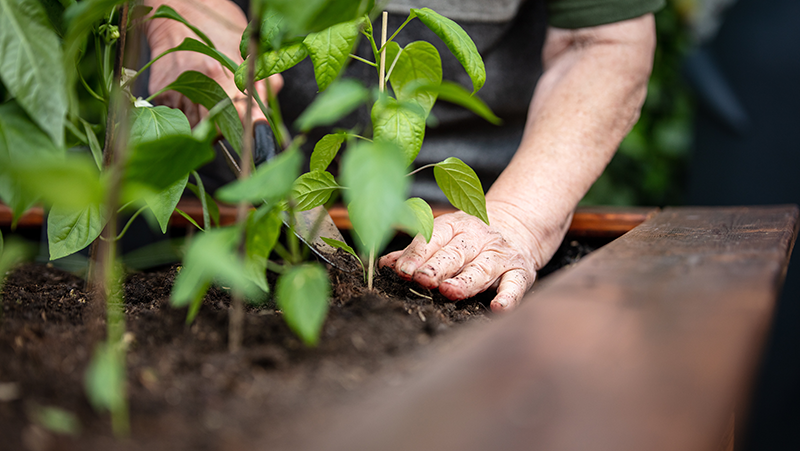
"Environmental enrichment intentionally shapes everyday environments to invite rehabilitative behaviours, enabling stroke survivors to use their affected arm more frequently, making recovery visible, measurable, and more likely to persist."
- Luca Opicci, PEER-HOMEcare project member
The Rationale
Explore the 3 main PEER-HOMEcare concepts below:
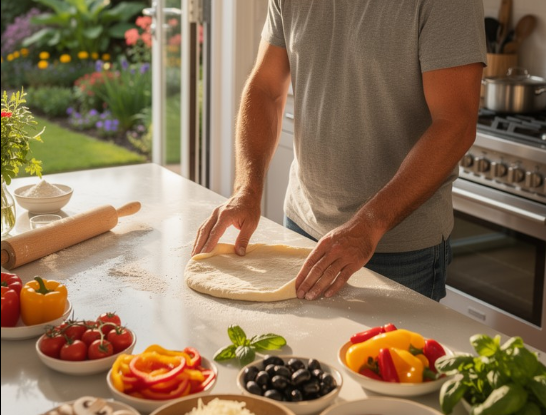
This intervention values the home itself as a potential rehabilitation environment. By carefully designing and adjusting the home environment, we can create rich opportunities that invite survivors to explore and adapt through movement.
These movement opportunities are designed to meet their rehabilitation needs and to support them in everyday tasks, such as preparing meals, dressing, or enjoying hobbies again. We should focus on creating environments that invite movements with the affected upper limb to induce neuroplastic changes.
Through co-designing with the stroke survivor and their family, environmental changes are embedded in the stroke survivors’ everyday life.
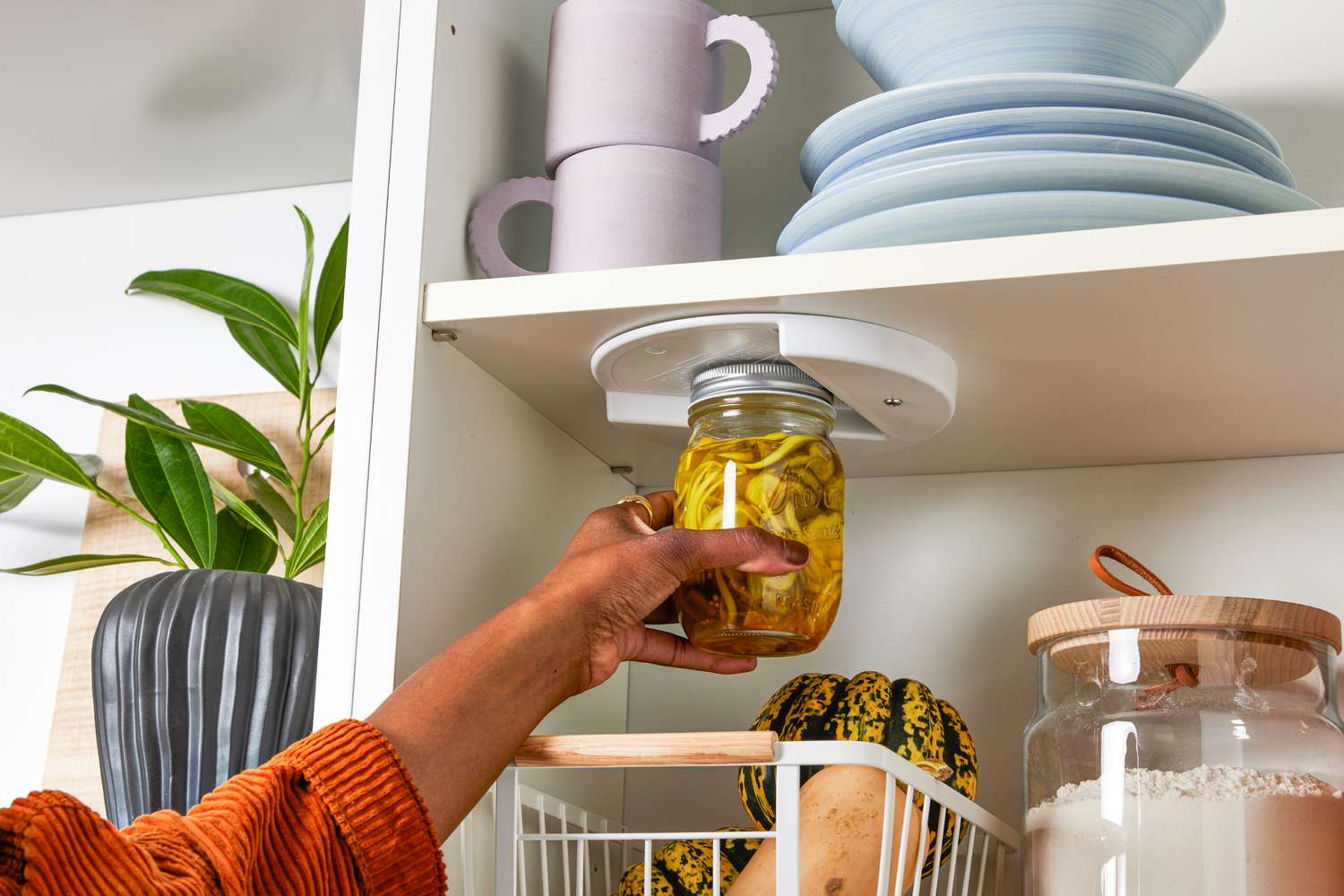
When individuals interact with objects, spaces, and people, they constantly perceive their own possibilities for action - psychologists call these affordances. For example, a handle affords pulling; a cup affords grasping; a cushion affords support. Affordances are relational in that they are unique to all of us as what the environment ‘offers us’ is based on our physiological and neurological capacities, our emotions, abilities and our memories.
This means that homes are very powerful environments for rehabilitation BUT they also can be hugely frustrating or overwhelming environments post stroke as the individuals physiological and neurological capacities have been significantly impacted.
The heart of enrichment is making the home environment aligned with the individual’s current capacities, as well as being inviting to rehabilitative behaviours, observable through exploratory actions and variability in movement.
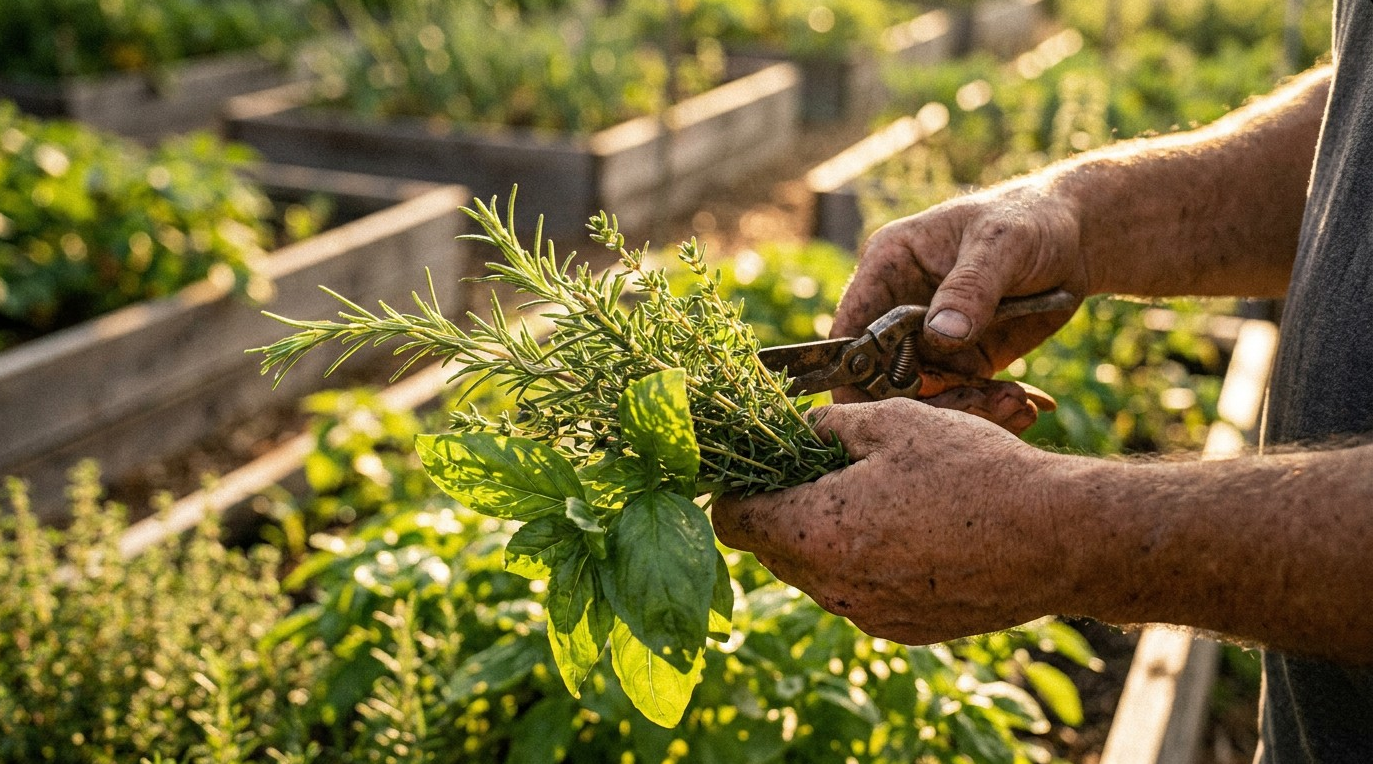
The purpose of this intervention is to design a progressive enrichment that both increases frequency and challenges use of the affected limb in everyday home-based tasks, naturally resulting in exploratory actions.
Exploratory actions create inherent variability in movement promoting the rehabilitation and learning process. These natural tendencies can be observed through a trained eye and supported with our wearable sensor system.
In this intervention, as you will learn in the next section, enrichment is about re-designing spaces and modifying everyday objects found in the home to encourage use of and exploration with the affected limb. The idea here is not to make large structural changes, but small well-considered changes that lead to large effects in stroke survivor’s use of the affected limb.
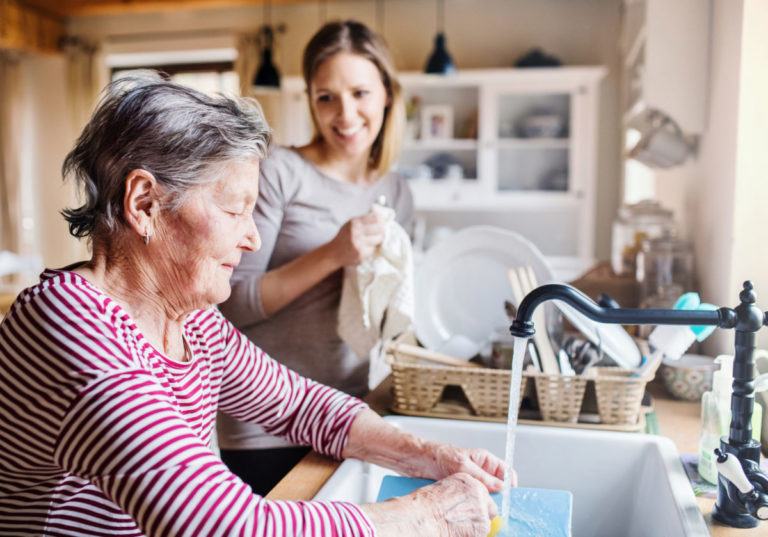
Who does what.
Understanding each person's role helps you set the right expectations from the start.
- Conduct assessments that helps us understand the participant
- Suggest and track changes within the home environment
- Review sensor data at each visit
- Taper visits as independence grows
- Participate in the co-design of home adaptations
- Facilitate mapping goals, routines, home environment
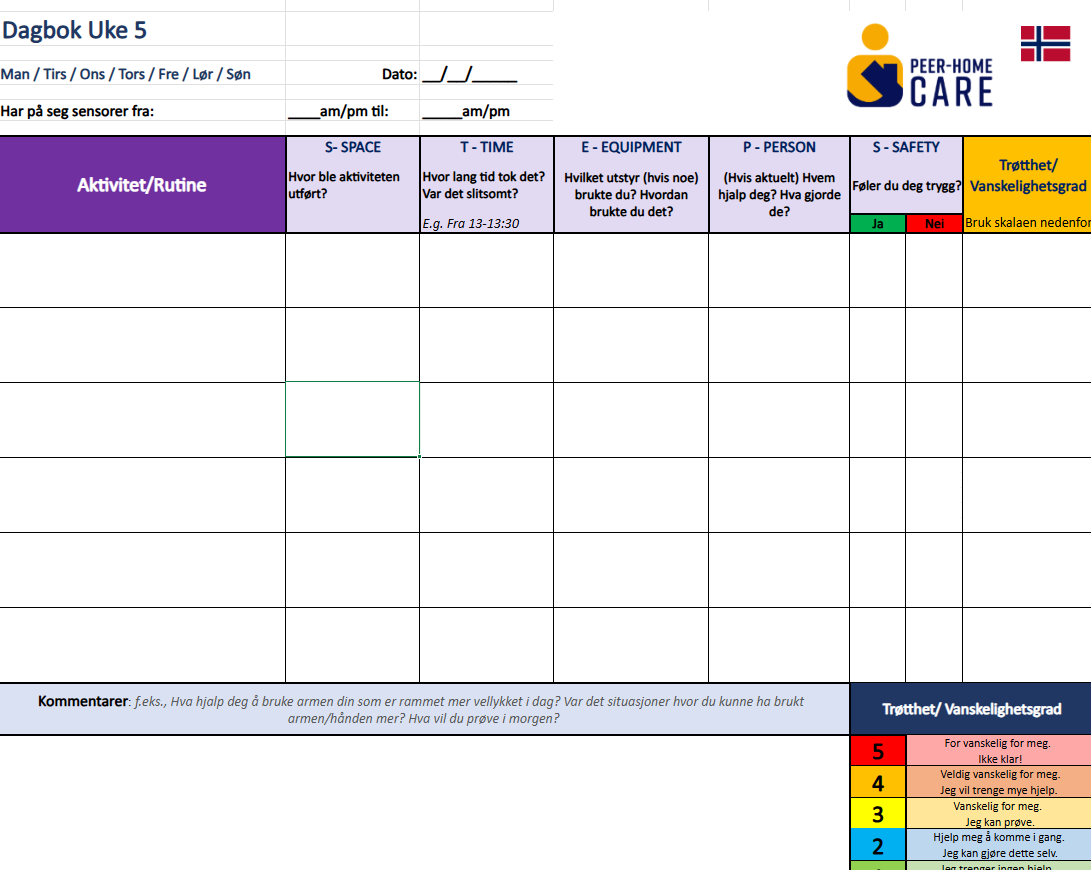
- Fill out the daily diary
- Wear sensors during daily activities
- Drive their own recovery
- Represent a critical social stimuli
- Encouraged to participate in the co-design of home changes and join visits
- Help maintain motivation
- Assist with sensors if needed
The Environmental Enrichment Process.
Environmental Enrichment (EE) is the core methodology of PEER-HOMEcare. It means adapting the home to actively encourage movement, exploration, and engagement.
The Enrichment Process
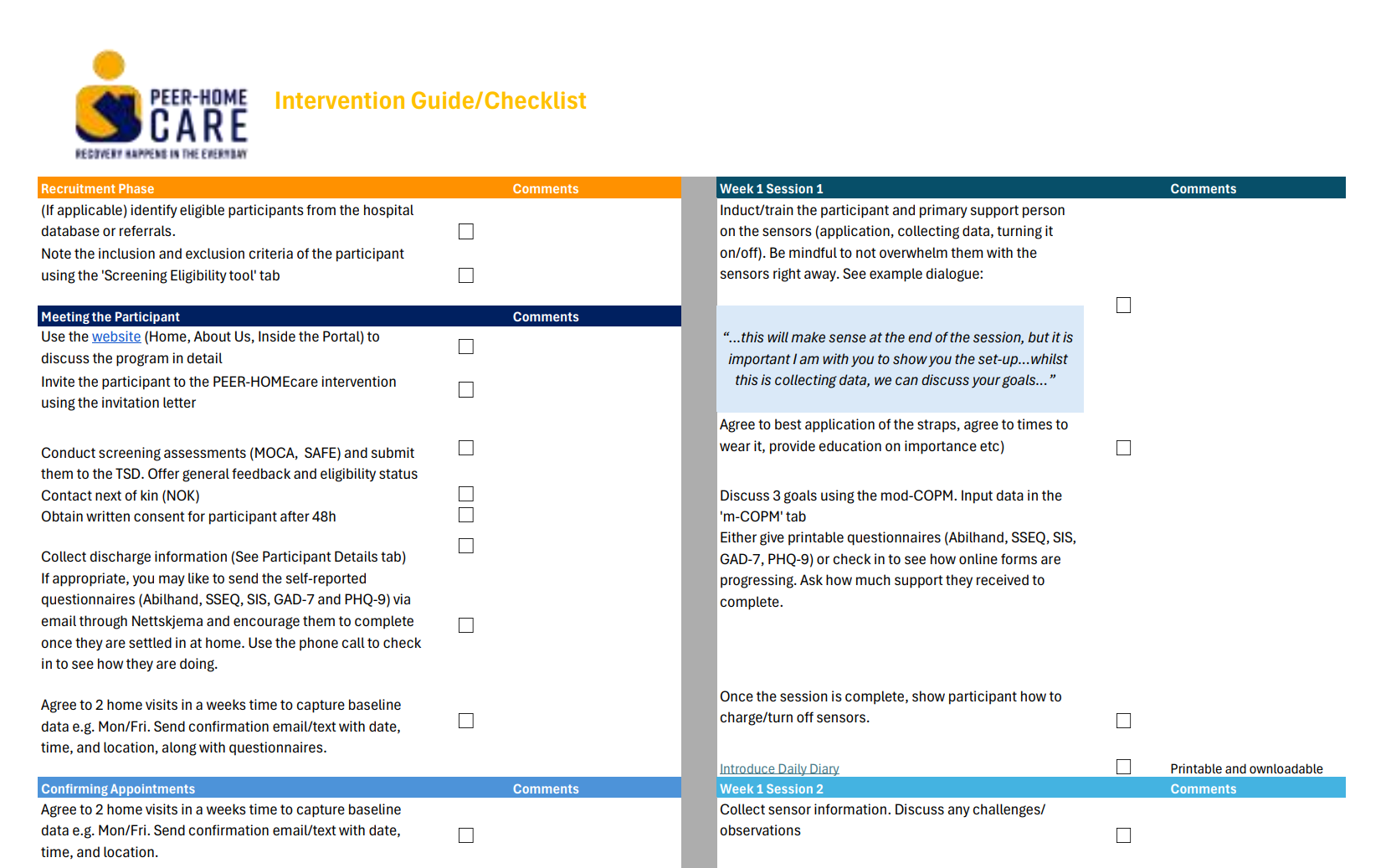
Use mod-COPM to identify at least three meaningful goals. Document in the m-COPM tab in the Participant Log excel sheet. Note: that these goals may change throughout the intervention.
Walk through the home with the participant. Identify opportunities and barriers for arm use in daily activities. We consider the Space, Time, Equipment, Person and Safety (STEPS) when guiding the process to set up an enriched home. It is up to you to co-design a space that allows for everyday opportunities of meaningful movement, exploration, and re-learning.
The mapping primarily includes three themes: what is currently happening, what could be changed to simplify and facilitate engagement, and what could be changed to increase the challenge?
Take a look at how you can use STEPS by asking yourself the following questions under each stage below. Use the Environmental Mapping tool in the Participant Log excel sheet to document findings.
Collaborate with the participant to design specific activities that target the affected arm in their daily routines. Activities should be meaningful, targeted, and progressively challenging.
Support the participant in integrating activities into their daily routine. Monitor use of their affected arm with the sensor data and review the daily diary at each visit to track progress and adjust the program to regress or to make it more challenging as they grow more confident.
A person’s home is always changing, and it should grow and adapt as their needs change during the intervention. It’s not about creating a “perfect” model home – it’s about shaping a space that truly works for them.
For a stroke survivor, re-learning isn’t about doing things exactly the way they used to. It’s about finding new strategies that fit their current strengths and abilities.
You may like to taper visits and transition towards independence over weeks 4-6.
Environmental Mapping the Home
The mapping primarily includes three themes: what is currently happening, what could be changed to simplify and facilitate engagement, and what could be changed to increase the challenge?
Collaborate with the participant to choose tasks connected to the person's identity, independence, daily roles or enjoyment.
Does this space support the person to do what is important to them in their daily life?
Ask:
- In which room(s) the activity is performed?
- Does this space encourage real-life conditions?
- Does the space support appropriate posture, stepping, reaching, or transfers specific to the task?
“Does the space enable or limit the person’s independence in tasks they value?”
Can the person carry out this activity at a time that suits their energy, preferences, and daily life?
Ask:
- When does their version of this activity naturally occur? e.g. morning routine, toileting, meals, bedtime
- Can the task be increased within the person's existing routine?
- Can the task be broken into small wins that still feel meaningful?
- Are timing and energy matched to the participant’s best performance?
- Does the time need to be reduced to avoid sedentary behaviours?
“Is the participant actually getting enough practice of what they care about?
What equipment or adaptations best support engagement in the meaningful activity?
Ask:
- What equipment would enable this person to successfully complete their meaningful task?
- Does the equipment encourage engagement rather than dependence?
“Is this equipment helping the participant actively do the task they care about or is it reducing their need to engage in it?”
Does this task matter enough to the person and feel achievable enough that they will choose to practice it?
Ask:
- What abilities shape how the task is performed?
- What motivates or discourages practice about this activity? e.g. confidence, fear of failing, enjoyment vs frustration, perceived relevance?
- Who is involved in this task, and how do they support it?
- How much support does the survivor want and respond well to? e.g. Consider physical assistance vs verbal cues vs supervision, preference for independence and reassurance, respect for autonomy while ensuring safety.
“Is this task truly achievable and meaningful for this person right now?”
How is safety managed so the participant can confidently engage in meaningful practice?
Ask:
- What are the real risks associated with this activity for this person? e.g. falls, fatigue, environmental hazards
- Are safety supports allowing active movement while reducing preventable risk?
- What level of supervision or safeguarding is needed right now? e.g. hands-on assist, supervision, or set-up only? Are instructions simple and consistent?
- Does the participant feel safe enough to try?
"Is safety being managed in a way that allows the participant to practise what matters to them with confidence - not avoidance?"
Focused specifically on increasing use of the affected arm through opportunities built into daily routines.
Is the physical environment directly supporting performance of the target task?
Ask:
- Is this the actual space where the target activity occurs?
- Have pathways, furniture, and positioning been arranged to promote practice rather than avoid challenge?
- Does the layout support appropriate posture, stepping, reaching, or transfers specific to the task?
- Are commonly used items positioned to encourage use of the affected side?
“Does this space set the person up to practise the task they care about?”
Is practice of the target task intentionally built into daily routines?
Ask:
- When does this task naturally occur during the day?
- Are there multiple opportunities for real-world repetition?
- Can the task be broken into shorter practice bouts across the day?
- Does the schedule consider fatigue, cognition, and attention capacity?
- Does the time need to be reduced to avoid sedentary behaviours?
“Is this routine creating enough chances to practise what matters?”
Is equipment selected to enable targeted success—without removing necessary challenge?
Ask:
- Does this equipment support the person to perform the task rather than replacing movement?
- Is it adjusted to promote correct movement strategies for the task?
- Can equipment be graded or removed over time as ability improves?
- Is the equipment positioned to encourage active use of the affected limb?
“Is this equipment helping the person do the task — or doing it for them?”
Are interventions matched precisely to the individual’s abilities, needs, and motivation for this task?
Ask:
- Do the task demands match the person’s current physical and cognitive abilities?
- Are vision, sensation, endurance, or communication affecting performance?
- Is this task personally motivating enough to drive effort and engagement?
- Are carers supporting participation rather than completing the task for the person?
“Is this task truly achievable and meaningful for this person right now?”
Are safety strategies tailored specifically to enable confident practice of this target task?
Ask:
- What risks exist during this task specifically?
- Are safety supports allowing active movement while reducing preventable risk?
- Is supervision being reduced as skill increases?
- Are any restrictions unintentionally limiting independence or practice?
“Is safety being managed in a way that still allows real practice?”
Modify and progress the task gradually. Mastery at each level builds the foundation for the next.
How can the environment be modified to require more active movement and control during the task?
Ask:
- Can physical supports or furniture reliance be reduced?
- Can distances be increased or walking routes made slightly more demanding?
- Can reaching, turning, or stepping requirements be increased?
- Can objects be positioned to further encourage use of the affected side?
“Does this space now challenge the person more while still supporting safe success?”
How can practice frequency, duration, or complexity be gradually increased?
Ask:
- Can repetitions or practice sessions be increased across the day?
- Can rest periods be reduced as endurance improves?
- Can task components be linked into longer functional sequences?
- Is task performance becoming faster, smoother, or more efficient?
“Is this routine promoting more independence and less reliance on rest or assistance?”
How can equipment be graded to promote greater active participation?
Ask:
- Can assistance levels be reduced or removed?
- Can equipment be simplified or replaced with less supportive tools?
- Does remaining equipment still encourage movement rather than compensation?
- Is progression planned rather than indefinite reliance?
“Is this equipment evolving as ability improves — or staying static?”
Are task demands increasing as the person’s capacity improves?
Ask:
- Is the task still within a “just right” challenge zone?
- Can external cueing, facilitation, or hands-on assistance be reduced?
- Can dual-tasking or problem-solving demands be increased?
- Does the goal feel personally meaningful or motivating to the person?
“Am I adapting the task to match the person’s improving abilities?”
How can safety supports be adjusted to promote greater autonomy while maintaining protection?
Ask yourself:
- Can direct supervision move to standby or remote monitoring?
- Can safety restrictions be reduced as control improves?
- Are emergency systems in place to allow independence with confidence?
- Is the risk-benefit balance still supporting growth, not avoidance?
“Is safety promoting independence rather than limiting progress?”
Adapted from [J. Rudd, 2025] “Re-educating the Perception–Action System in Stroke Rehabilitation
Built on evidence. Tested in the real world.
Learn about how we got here.